
Species: Psilocybe cubensis
Common name: Magic Mushroom, Golden Teacher, Cube
iNaturalist Taxon ID: 328244
Overview
Psilocybe cubensis is the most widely recognized psilocybin-containing mushroom species in the world, known for its robust nature and ease of cultivation. First scientifically described in 1906 by American mycologist Franklin Sumner Earle in Cuba, this species has since been found across tropical and subtropical regions worldwide. Originally classified as Stropharia cubensis, it was moved to the Psilocybe genus in 1949 by mycologist Rolf Singer.
P. cubensis has a fascinating ecological relationship with cattle ranching. The species grows naturally on bovine and equine dung in pastures, and its spores are often dispersed by cattle egrets that migrate across continents, allowing the mushroom to spread to suitable habitats thousands of miles away. This symbiotic relationship has enabled P. cubensis to colonize new territories, including Australia following the introduction of cattle in the early 1800s.
Habitat & Season
This species is coprophilous and saprophytic, growing primarily on nutrient-rich dung and decaying organic matter.
- Substrate: Cow dung, horse manure, rich pasture soil, sugar cane mulch
- Environment: Open grasslands, cattle pastures, tropical and subtropical regions
- Season: February to December (Northern Hemisphere); November to April (Southern Hemisphere)
- Observations: Via iNaturalist
Identification & Morphology
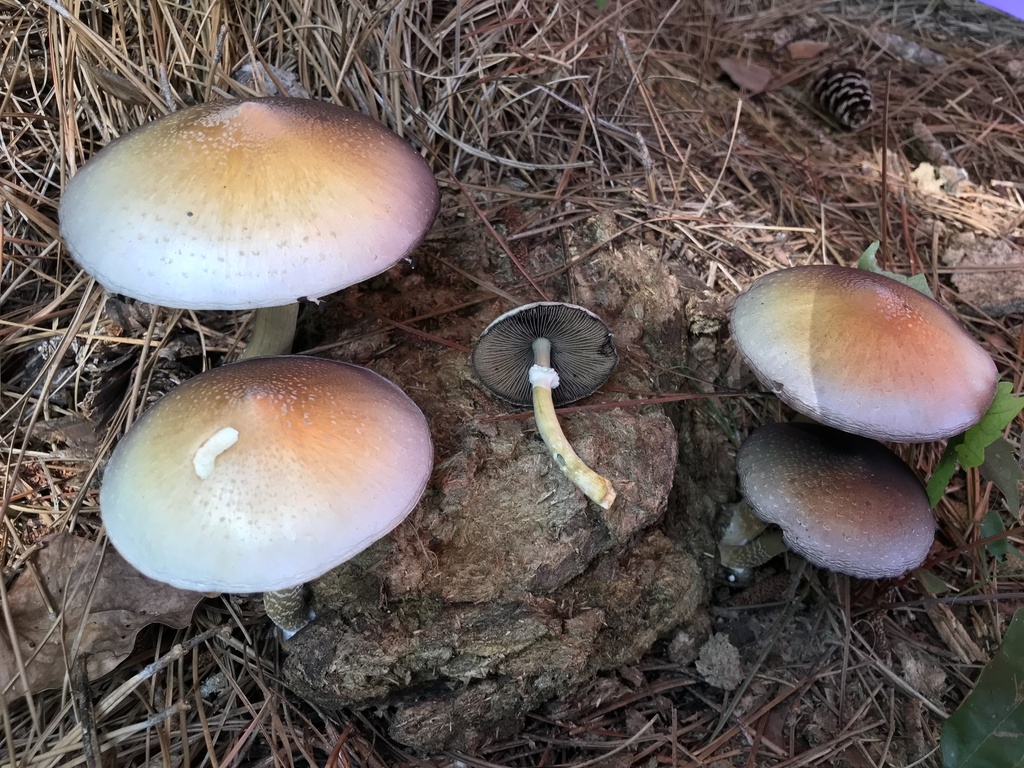
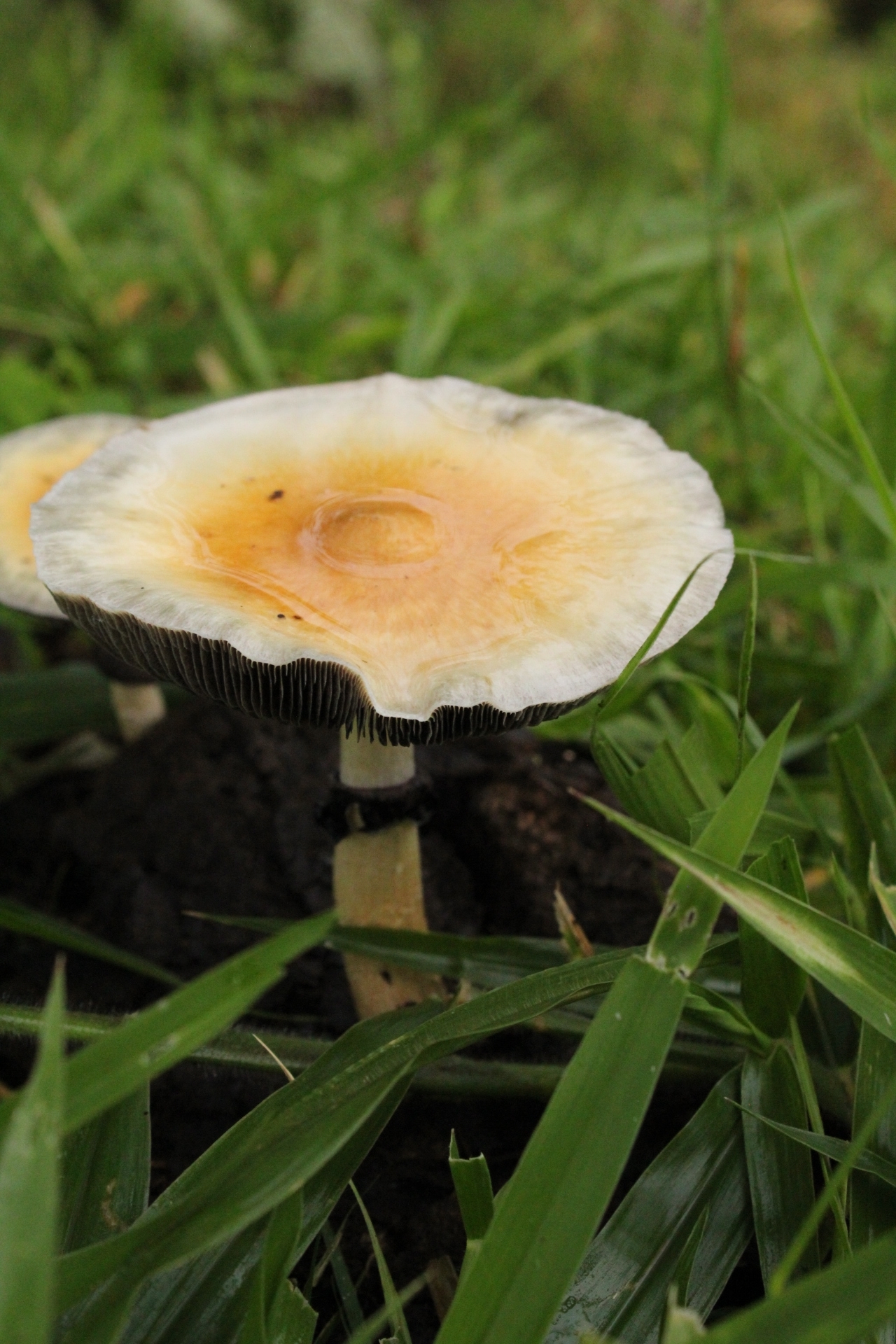
- Cap: View 1.6–8 cm, conic to convex with central papilla when young, becoming broadly convex to plane with age; smooth and sticky surface, brown fading to pale tan or yellowish-white at margins; may retain white universal veil remnants.
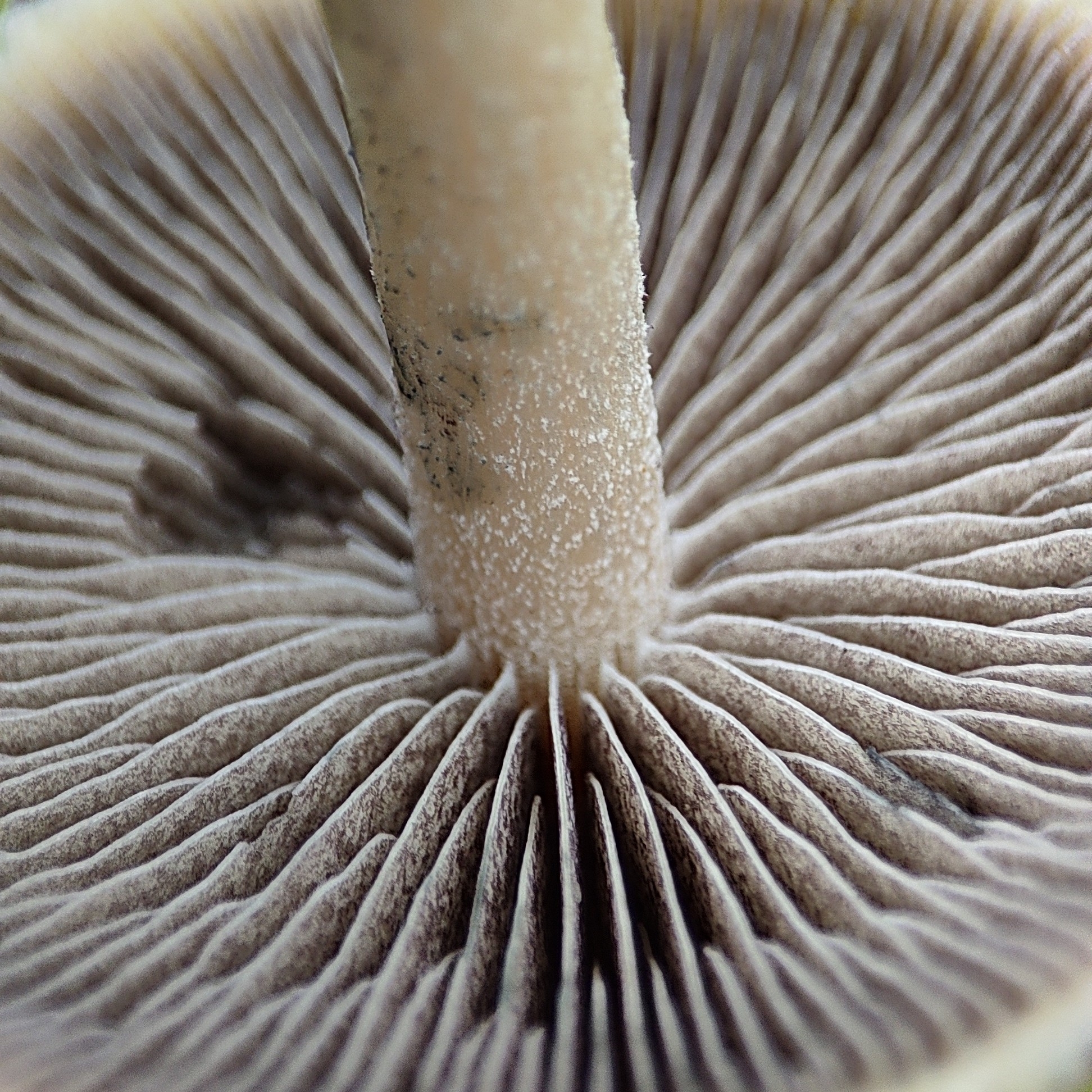
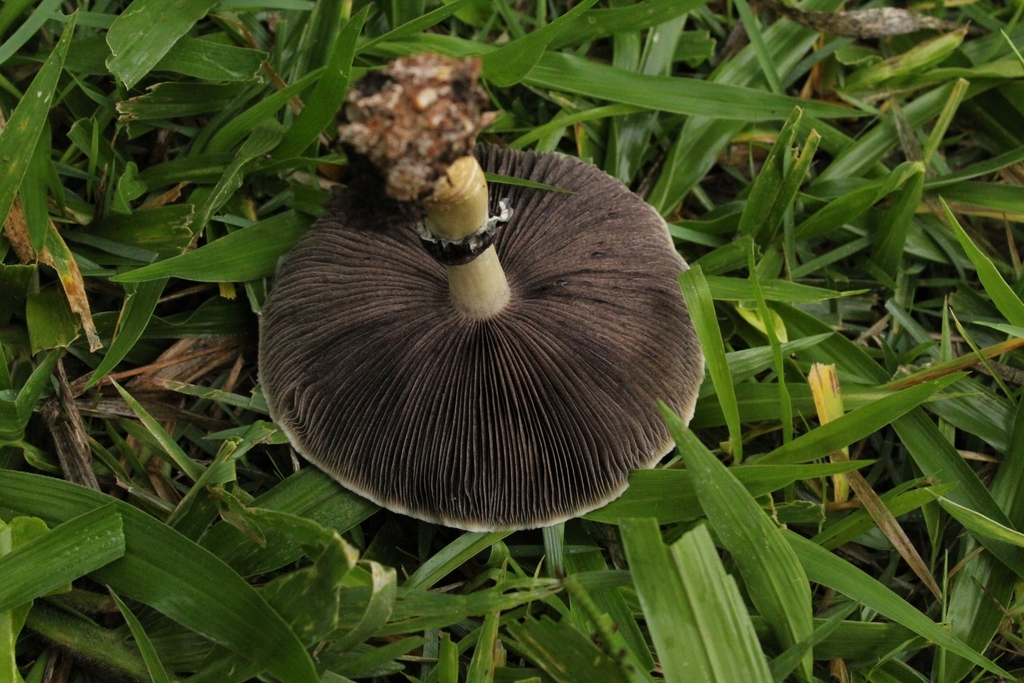
- Gills: View Adnate to adnexed, close spacing, initially pale gray becoming dark purplish-brown to nearly black with maturity.
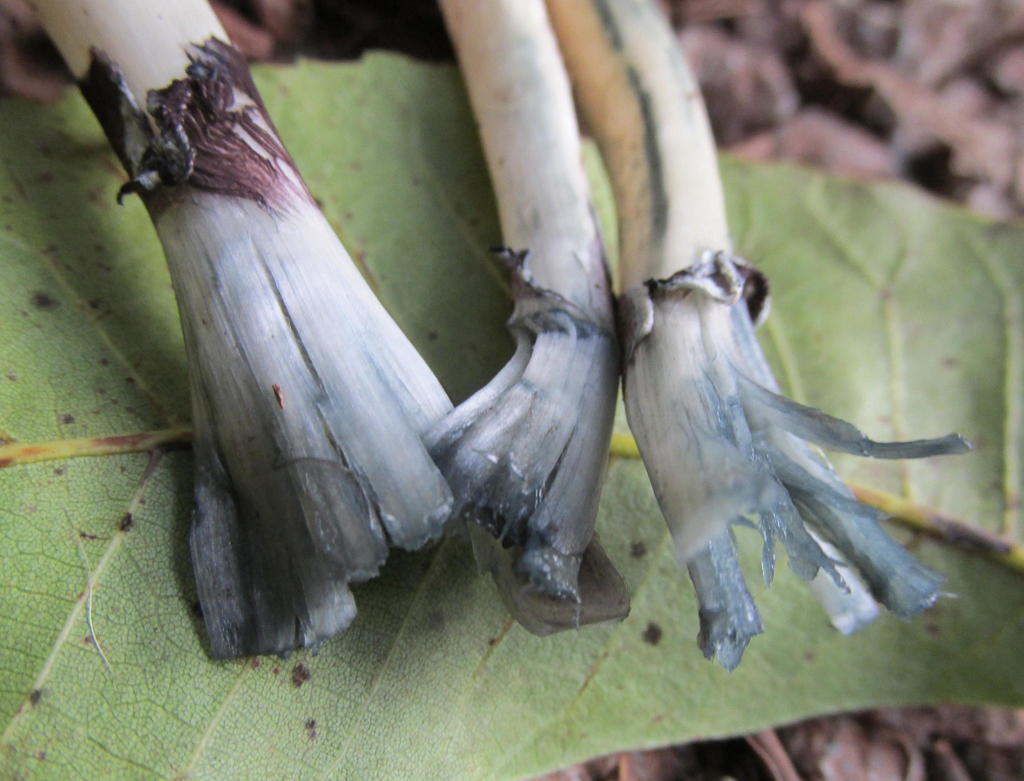
- Stipe: View 4–15 cm tall, 0.4–1.4 cm thick, white to yellowish, hollow; partial veil often leaves persistent annulus (ring); bruises blue when damaged.
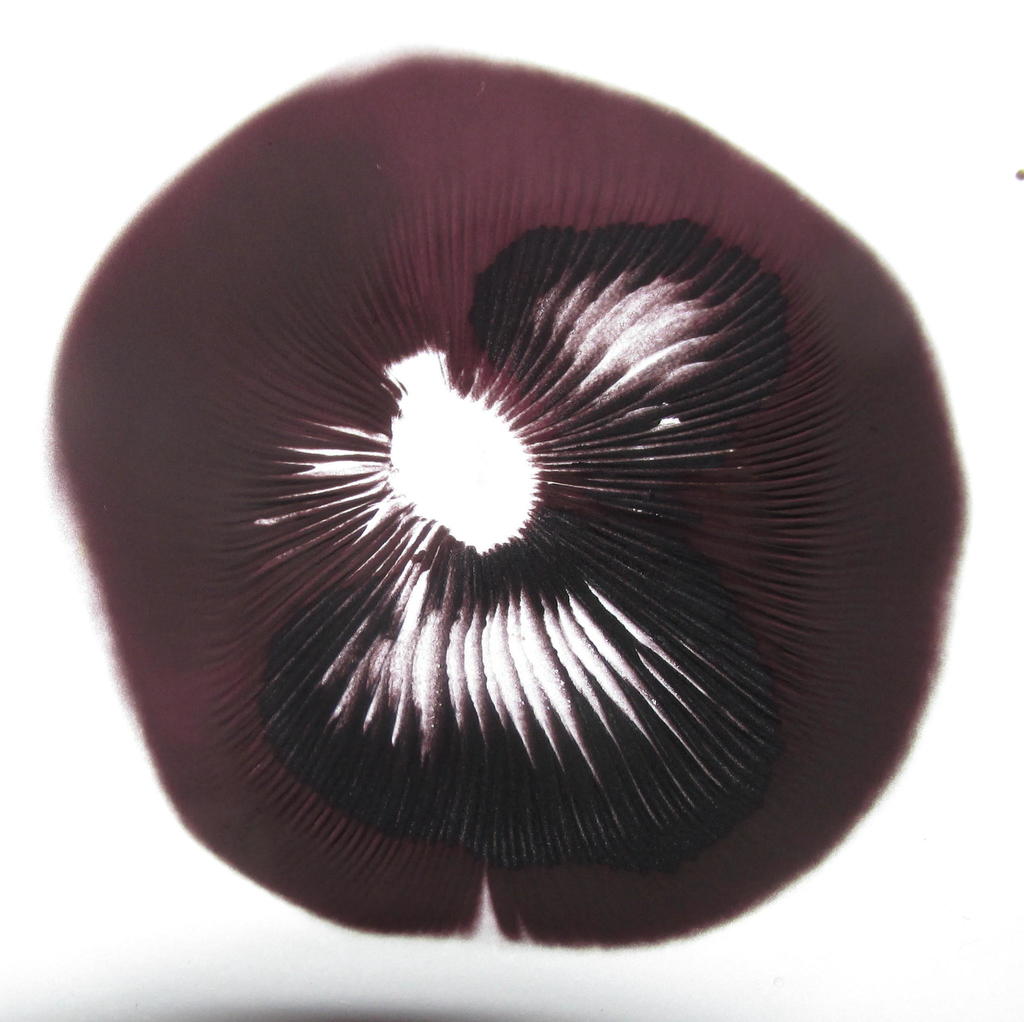
- Spore print: View Dark purplish-brown to nearly black.
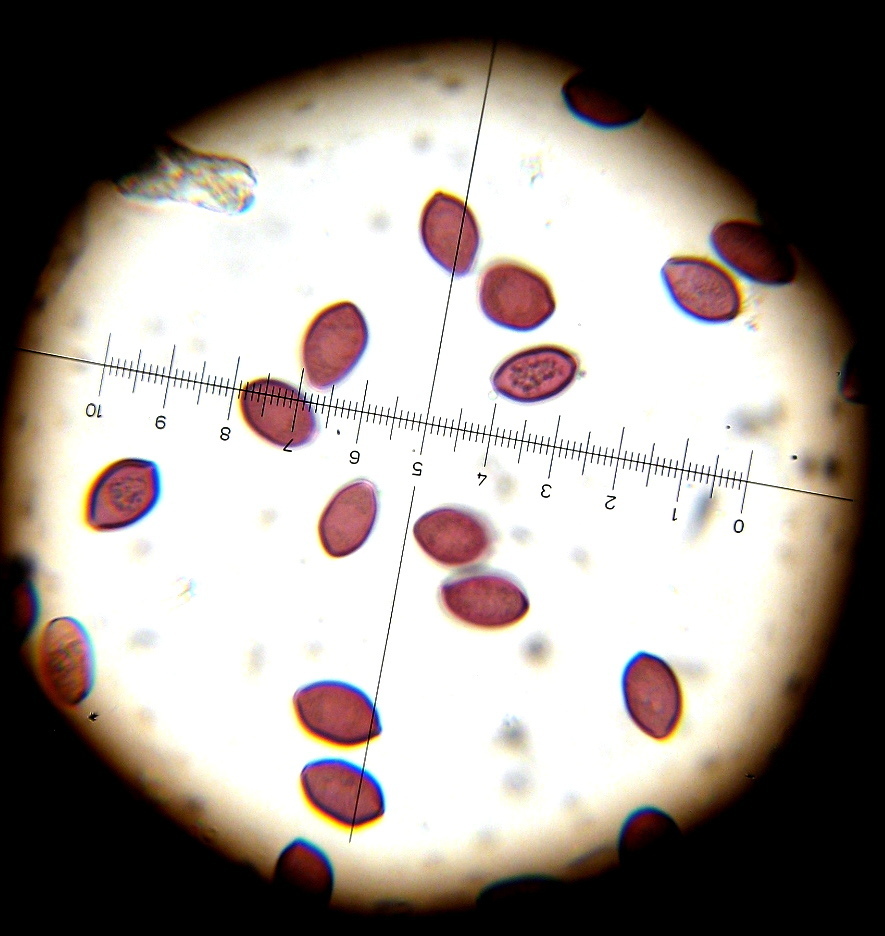
- Spores: View 11–17 × 7–12 μm, subellipsoid, thick-walled with germ pore.
Alkaloid Profile (Approximate)
| Alkaloid | Estimated Range (mg/g dry) |
|---|---|
| Psilocybin | 3.7 ~ 13.0 mg/g |
| Psilocin | 0.5 ~ 4.2 mg/g |
| Baeocystin | 0.14 ~ 0.88 mg/g |
| Norbaeocystin | 0.04 ~ 0.16 mg/g |
| Aeruginascin | 0.03 ~ 0.05 mg/g |
Note: Alkaloid content varies significantly between strains, growth conditions, age, and storage methods. Laboratory-grown specimens generally show more consistent concentrations than wild specimens.
Many mushrooms resemble P. cubensis, including deadly or toxic species. Genera such as Galerina marginata (contains deadly amatoxins, grows on wood with rust-brown spore print), Pholiotina rugosa (potentially deadly, grows in pastures), Conocybe (some species toxic), and Chlorophyllum molybdites (causes severe gastric distress, greenish spore print) can be fatal if misidentified.
Never rely on bruising, color, or photos alone for identification. Critical features include spore print color, substrate preference, and microscopic characteristics. No trip is worth dying over.
Drug & Medication Interactions
- MAOIs: Can dangerously intensify and prolong effects
- SSRIs/SNRIs: May significantly blunt effects or increase serotonin syndrome risk
- Antipsychotics: Unpredictable interactions, may block or intensify effects
- Lithium: Potentially dangerous interaction with increased seizure risk
- Alcohol / Sedatives: Increased impairment and unpredictable effects
- Cannabis: Can amplify anxiety, confusion, or paranoia
- Stimulants: Increased cardiovascular strain and anxiety
Growing
Among home cultivators, P. cubensis is the most popular species due to its forgiving growth requirements and ability to thrive on easy to make substrates including coco coir, vermiculite, straw, and composted manure.
Cultivation typically involves inoculating sterilized grain spawn, then, after full colonization, transferring to pasteurized bulk substrate like CVG or Coco Coir. Then it is placed in a monotub or grow bag to manage humidity and temperature conditions. The species produces multiple flushes and has spawned countless strains and varieties, from the resilient B+ (Be Positive) to the potent Penis Envy (P.E.) varieties. Resources like Shroomery and our Discord server provide extensive cultivation guides and community support.
If you'd like to get some research liquid culture check out our friends at True Blue Genetics